Choosing a Vehicle for your Business
Your choice of vehicle can say a lot about you and your business, reflecting your values, personality and brand image. Beyond appearances, it's essential to consider accounting and tax perspectives that might impact your choice.
What Does Your Vehicle Say about You?
You can’t control what others say about your vehicle choices, but you can control your internal narrative. Rather like choosing your fashion wardrobe to reflect your personal style, selecting the right vehicle and how you talk about it can say a lot about you and your business, reflecting your values, personality and brand image.
Professionalism and success might mean a luxury car model to some, but for others it could be a well-kept mid-range vehicle. Eco-friendly might translate to the latest Tesla EV or a Hyundai IONIQ. Practical and efficient might be a compact car for zipping around the CBD or a heavy-duty utility vehicle with canopy to safely store your tools. Budget-friendly may mean an older used car, or a fuel-efficient EV or hybrid.
Before you get too caught up with what others think about your wheels, ensure that your choice meets your financial considerations and suits your needs. Ultimately, it’s what you tell yourself that matters most.
Functional Considerations when Buying a Business Vehicle
Think carefully how your vehicle will be used. If you will frequently be transporting light goods, then a utility vehicle or van would be an obvious choice. If you will be transporting team members to events, then you may need a more versatile people mover could be more practical. Consider the types of roads you’ll encounter, distances travelled, and frequency. In high-traffic areas like the CBD, compact cars are easier to park and manoeuvre.
Vehicle safety is an important consideration for a business vehicle, as safe vehicles reduce accidents, meaning less chances of employee injuries and vehicle downtime. You can research the safety ratings and fuel efficiency of NZ vehicles at Rightcar.
Financial Considerations when Buying a Business Vehicle
There are several factors to consider when buying a business vehicle: cost and resale value, finance options, running costs.
Cost and resale value of vehicles
When you calculate the cost of your vehicle, consider on-road costs, cash discounts, trade-in value of your existing vehicle, insurance and warranties. Also consider add-ons like fixed shelving, canopy, towbar and signwriting. The Clean Car Discount scheme ended in December 2023, so there are no Government incentives to buy EV or hybrid vehicles.
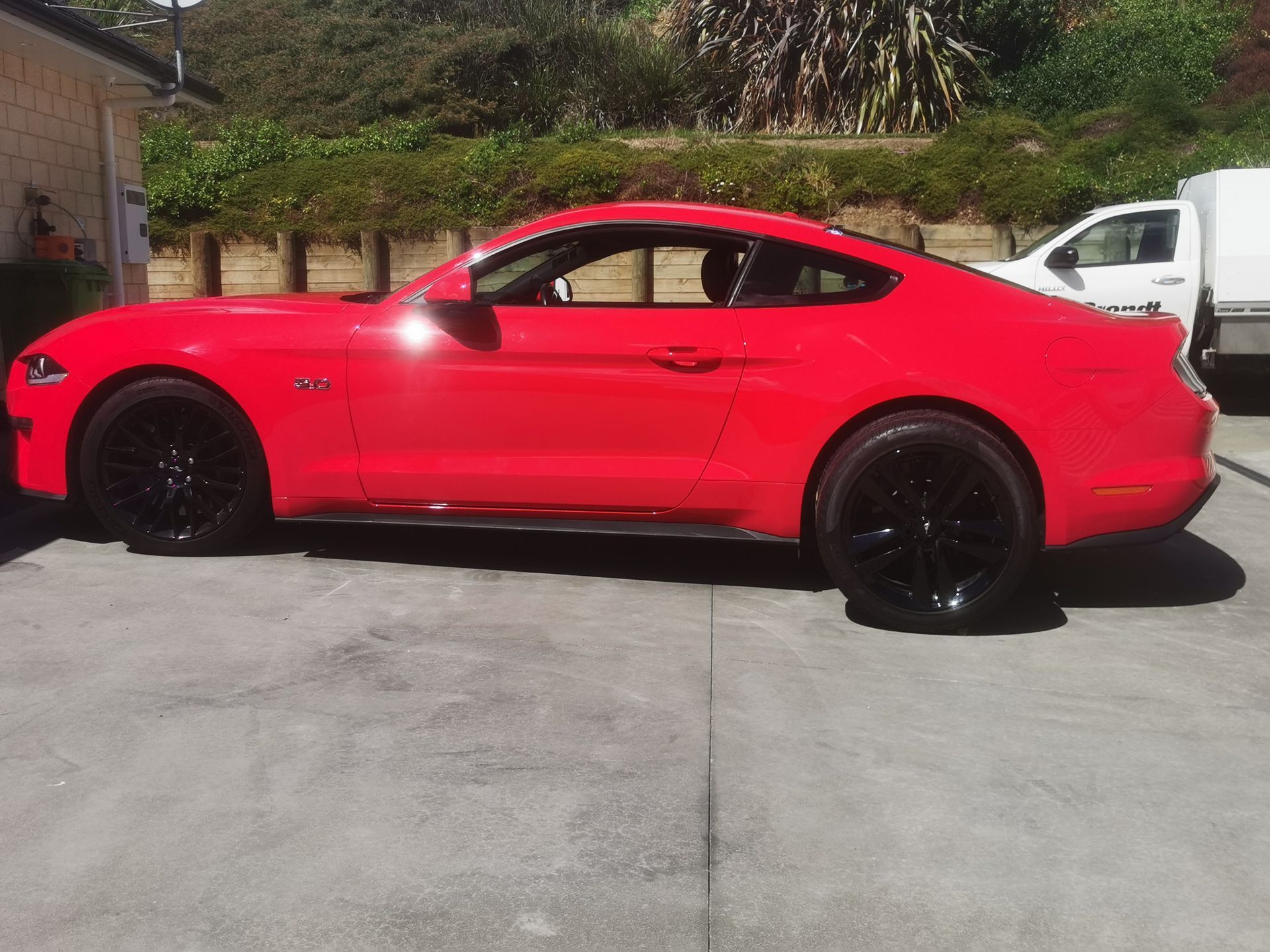
It is not a simple case of new vs used cars, because resale value can vary greatly between models. In general terms, new cars tend to lose value in their first year. But some new vehicles retain their value very well. My colleague Murray recently traded in his red 2018 Ford Mustang for an orange 2024 EV model, and thanks to the strong trade-in value, he only paid a small difference.
Lease or buy finance options for vehicles
People often ask whether lease or buy is better for tax benefits, but the real impact lies in cashflow.
If you tend to change your vehicle every 3 years or less, drive long distances, prefer new cars and new car warranties, then an operating lease will suit you better. An operating lease is a long-term rental, so at the end of the term, the vehicle is returned to the leasing company.
If you tend to keep your vehicle for four years or more, then buying outright or finance lease/hire purchase may be a better option. Buying outright can allow you to negotiate a cash discount and it can save on interest costs, but it may tie up funds that you want to use elsewhere. You may be able to borrow from your bank via overdraft or asset lending, or finance through a specialist vehicle leasing company.
A finance lease or hire purchase agreement allows you to pay for the vehicle in instalments and you gain ownership of the vehicle at the end of the period when you pay the residual value. Watch out for high residual values or balloon payments during the term, as you need to factor them into your cashflow planning. Compare the interest rates and overall finance costs of different options. Sometime low monthly repayments can hide a high rate spread over a longer term.
Running costs of vehicles
New cars usually come a three-year service warranty, but you can also get quality used cars with a similar warranty, such as the Toyota Signature Class. This means that that you can save significantly on regular maintenance checks and repairs. Older cars typically need more servicing, as they are less efficient as they age, they need repairs more often as parts wear out. Research how easy it is to get parts for your vehicle, as New Zealand is a long way from the car capitals of the world.
Electric vehicles (EV) and hybrid vehicles may save you fuel but consider how you will recharge them. You may need to install electric charging stations on your premises and plan your trips around when and where you can recharge. You can read more about fleet EV considerations here: Gen Less EV considerations. In New Zealand, you need to pay road user charges (RUC) if your vehicle runs on diesel, electricity or is a plug-in hybrid.
Tax Considerations
Once you have decided on which vehicle, and whether to lease or buy, you’ll need to consider the tax treatment of your vehicle decision, discussed further in our next blog. While tax may play a part in who owns the vehicle and what records you keep, it doesn’t play nearly as big a part in your decision making as you might think. We recommend choosing a vehicle that suits your budget and functional needs, rather than whether you can get a GST reduction, or an income tax write off.
Final Thoughts: Make Your Vehicle Work for You
Ultimately, the best business vehicle is one that supports your goals, fits your brand, and meets your financial and practical requirements. Choose wisely and make it a powerful tool in driving your business forward.
- Serena Irving
Serena Irving is a director in JDW Chartered Accountants Limited, Ellerslie, Auckland. She drives a 2004 Mazda Atenza; it suits her family of four, has low kms and doesn’t cost much to repair. If you want a vehicle enthusiast’s opinion, we suggest talking to Murray Wells or Rohit Prasad. JDW is a professional team of qualified accountants, business consultants, tax advisors, trust and business valuation specialists.
Download a PDF version here or contact the author by email. Like our Facebook page for regular tips.
An article like this, which is general in nature, is no substitute for specific accounting and tax advice. If you want more information about the issues in this article, please contact your adviser or the author.